America’s First Spy
In the early winter of 1775, a 21 year old Yale educated man who, on the basis of this education, was made Captain in the Continental Army and was stationed in Roxbury during the Siege of Boston. He was awash with passion to serve his country, but not much was happening at the time, mostly little skirmishes and very little gun play. He wanted to be “useful” as he put it. To say he was bored much of the day would be an understatement, but he tried to keep his men ready to go at a moment’s notice. He was so devoted to the mission of liberty that after arguing for an increase in pay to both keep his men from deserting and to encourage them to re-enlist he used his own pay to increase that of his men.
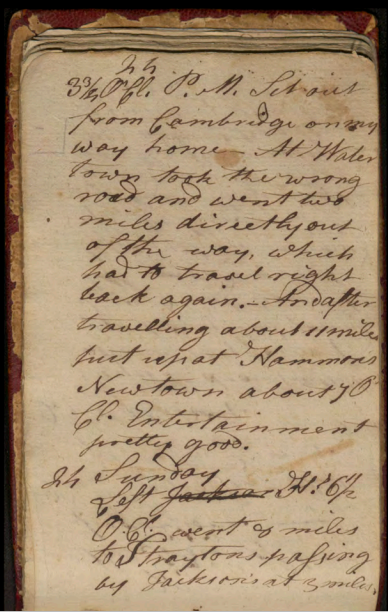
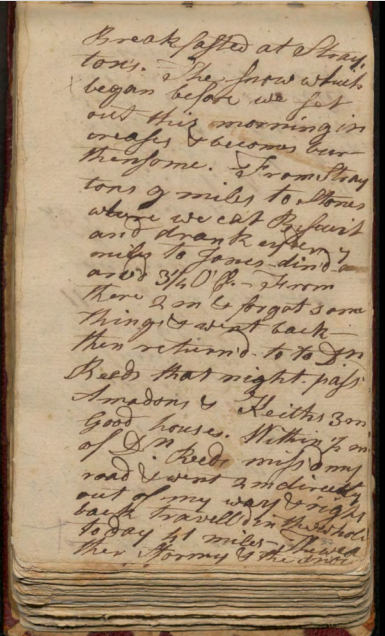
Eventually, shortly before Thanksgiving, George Washington agreed to allow furloughs on the promise to re-enlist. Our young man was yearning for a visit back to his family in Coventry, Connecticut. Although his men were allowed furloughs, his was not approved until late December and required his return within 30 days. So on December 23rd he begins his trip from Cambridge back to Coventry. He was out of money though having spent all he had trying to keep his men and thus had to borrow $76 from one of his fellow captains and began his journey hoping that he could make it back home by the end of December.
Connection to Mendon
Our young Captain had three major routes he could take back home which would have been the three Boston Post Roads known as the Upper, Middle, and Lower Boston Post Roads. Lower Post Road might have been the shortest, but was close to the shore where the likelihood to run into British soldiers and being captured would have been high (see attached map). Upper Post Road would get him there, but would have been significantly longer. So Middle Post Road it was, which goes right through our lovely town of Mendon.
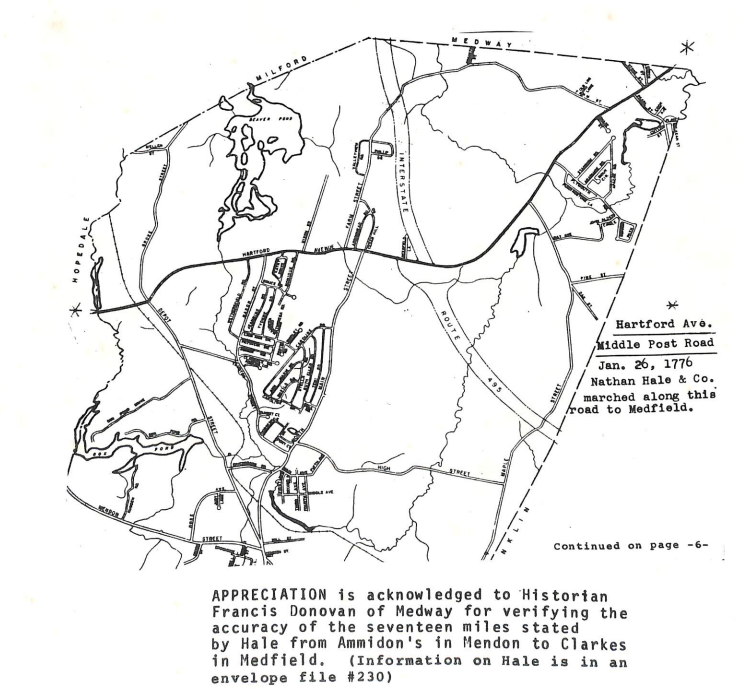
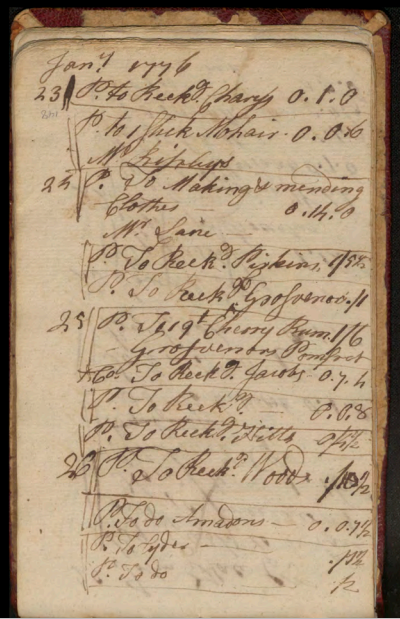
His journey was not smooth as he missed turns and went off course several times, but by the evening of the 24th his diary tells us he “Pass’d Amadons and Keiths”. While I presume you know that to which he refers when he says “Amadons” and which is the very Ammidon Tavern currently in the possession of our own Jane Lowell at 4 Main Street. Let me take now a short detour to discuss “Keiths”.
Keith’s Inn
Keith’s Inn was located on what is now 10 Hastings Street and is immediately to the left as you are facing Rockland Bank. There presently exists a building, unfortunately now covered with white vinyl siding and owned by the Hackensons, but underneath is made of red brick. This building was constructed around 1818 by Seth Hastings and was known by several names over its history. Perhaps most recently as the Adams House. Although there is speculation that Seth built it as a residence he never lived there and it functioned through the 1800’s and early 1900’s mostly as an Inn.
Now this is its history since 1818, our young Captain passes by in 1775. Let me explain. Seth Hastings came into ownership of this property having been made the guardian of a John Hill. John Hill had married the widow of a man named George Keith who, with his wife, established the Keith Inn on this very spot in about 1765 according to John Metcalf in the “Annals of Mendon”. He became John’s guardian because the Mendon Board of Selectman petitioned the probate court to appoint Seth because John was not taking care of his family and had a habit of drunkenness. It was up to Seth to use John’s assets to settle his debts and one of the things he did was to have the building, the Keith Inn, moved from this spot to a new location which is now 26 Maple Street.
The Unitarian Church was not yet built and therefore there was a direct path from 10 Hastings to 26 Maple to roll the building there on logs. The house located there now is the very Keith Inn of which our young man speaks in this diary. I’m not sure that this move was totally kosher as records indicate that the Selectman tried to petition the court to remove this guardianship feeling that Seth was taking personal advantage of it. (Side note: the author of this article tried to buy this house from Russ and Ann Dudley when they put it on the market and it just did not work out. Had it worked out, this building would not now have gray vinyl siding on it, but this is a discussion for another day.)
Ammidon Inn (Tavern)
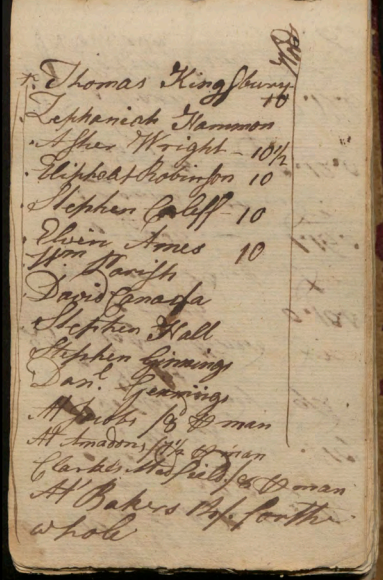
Returning to our hero, his diary says that he arrives back home on the 26th of December. For a young man I guess this would be entirely possible given that the distance involved here would have been around 90 miles. On his return to camp he starts out on horseback as his diary entry for the 24th of January 1776 says “I set out from my Father’s for Camp on horse back.” However, he goes on to say “At 11 o’cl. arv’d at Perkins by Ashford Meeting House where left the horses, 12 ½ o’cl. mch’d.” I presume this is where he meets his company or some part thereof.
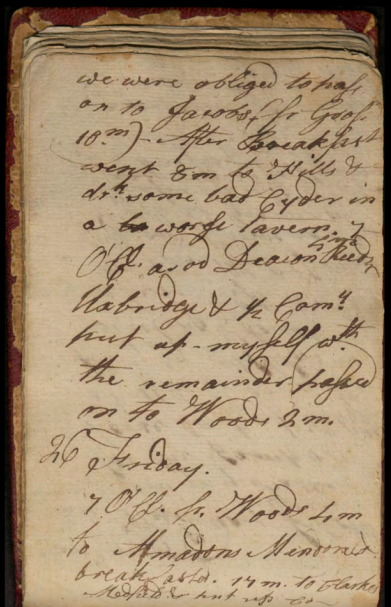
It is reasonable to assume he is not by himself. Tradition suggests he was with at least some number of his troops and hence not alone. On the 25th he records “…but another Co having been engaged breakfast there WE were obliged to pass on to Jacobs”. Later on the 25th he notes “arv’d Deacon Reeds, 5 m. Uxbridge, and ½ comy put up, myself wth remainder passed on to Woods 2m.”
Our venerable Mendon historian, Dick Grady, knows of this Woods Inn and where it would have been located in Uxbridge and it is about 4 miles from the center of our fair Mendon. On awaking the next morning at Woods he, and the ½ of his company that slept there, set out again and he further records in his diary on the 26th of January as follows: “7 o’cl. fr. Woods 4m. to Almadons Mendoreld—breakfasted.” I think it is fair to say that the spelling is some kind of a transcription error or impairment in the original document making it less readable, but there is more than enough evidence to confidently conclude this is the very Ammidon Tavern at 4 Main Street. It is unclear from his diary entries whether or not they waited for the other ½ of the company to catch up to them at Woods before continuing on to Ammidon’s Tavern. His full company has been noted elsewhere at around 70 men.
Whether 35 men or 70 can you imagine the commotion and excitement of a group that large, directly involved in the American Revolution and the Siege of Boston having breakfast at our Inn? I would imagine it would have drawn attention of others in Mendon attracting some number of them to come see what the commotion was and sparking conversation about gaining our independence.
Who was this man? Perhaps you’ve figured out (by the title of this page or otherwise) that he was the man who would, by mid-September, become the first American spy working directly for General Washington: Nathan Hale.
Write-up from Jane Coleman (Mendon Historian)
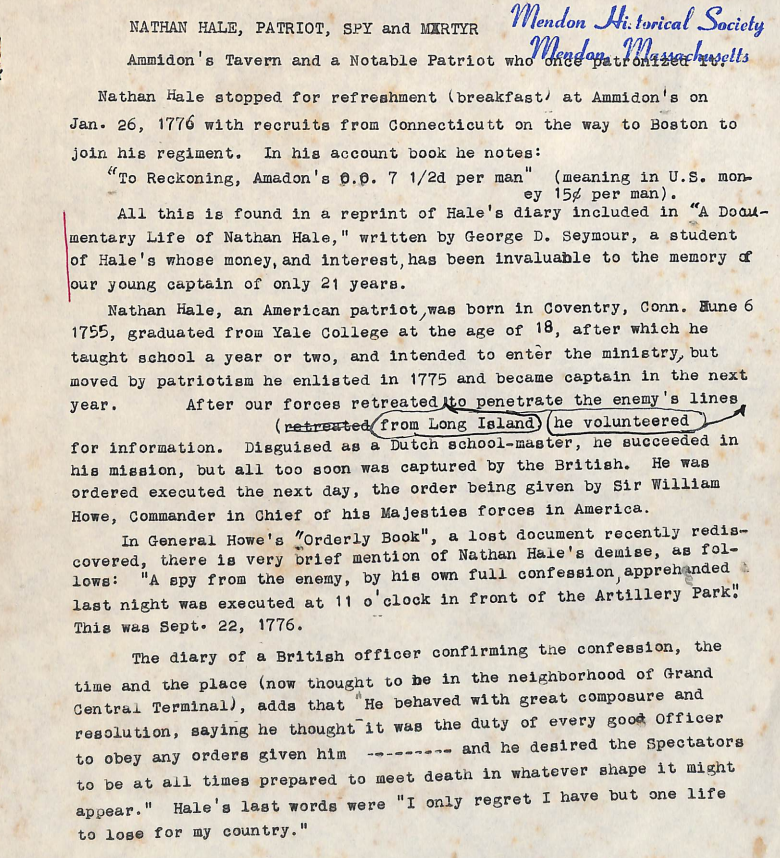
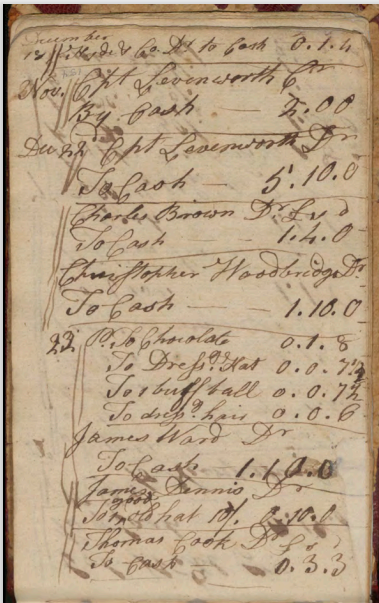
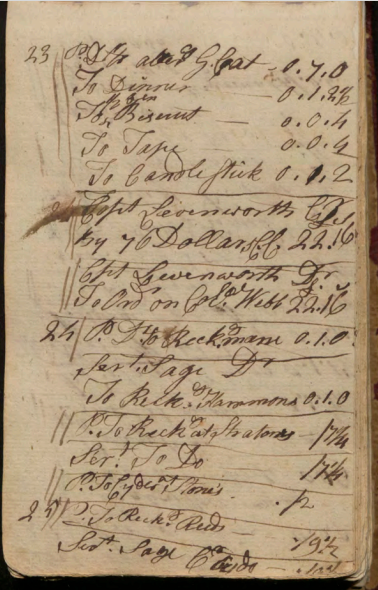
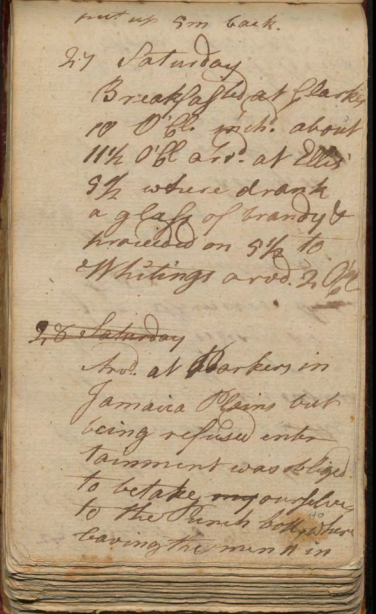
Hale Diary Entries (courtesy of Connecticut Historical Society)
 Mendon Historical Society